
How to Apply for a Travel Loan to Relocate to Canada in 2026
22 Apr 2026 • 15 min read • By Sure Jobs
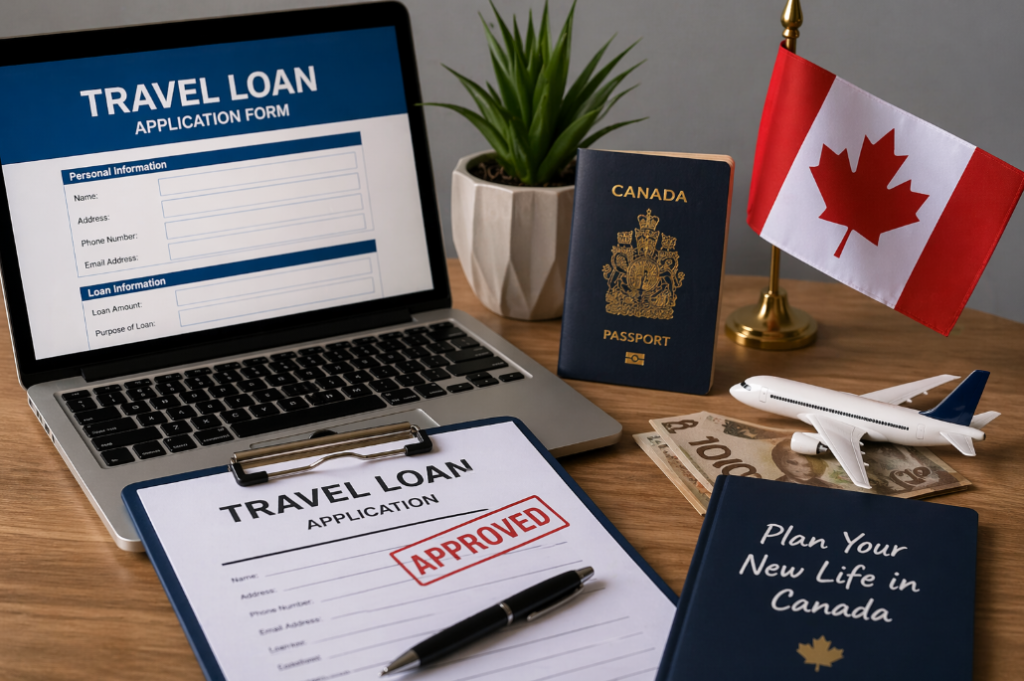
If you are dreaming of visiting or moving to Canada, you have probably already started adding up the costs. Flights, visa fees, biometrics, travel insurance, proof of funds, and that first month of accommodation can easily run into millions of naira. For many Nigerians, the dream of studying in Toronto, working in Vancouver, or finally getting that permanent residency approval stalls not because of qualifications or determination, but simply because of money.
That is where a travel loan comes in. A travel loan is really just a personal loan that you use to pay for your trip or relocation expenses. Unlike a credit card that can bury you in compound interest, most travel loans offer fixed interest rates and clear monthly repayments, so you know exactly what you are getting into. It is a way to spread the financial load over several months instead of draining your entire savings account at once.
In this guide, I will walk you through everything I wish someone had told me before I started looking for travel loans. We will talk about the different types of loans you can get, who qualifies, what documents you need, how to actually apply step by step, which lenders in Nigeria offer good deals, and some honest tips to get your loan approved quickly. Whether you are going as a tourist, a student, a skilled worker, or a permanent resident, this guide is for you.
What Exactly Is a Travel Loan for Canada?
A travel loan is simply a personal loan that you use to pay for travel and relocation costs. Most of the time, these loans are unsecured, meaning you do not have to put up your house, car, or land as collateral. The lender looks at your income, your credit history, and your ability to repay, then decides whether to give you the money.
You can use the loan for pretty much any travel related expense. That includes your flight ticket, visa application fees, biometrics, travel insurance, hotel or short-rental accommodation, the proof of funds that Canadian immigration asks for, and even those first few weeks of groceries and transport while you settle in. Some people also use travel loans to pay for medical exams or police clearance certificates that their visa type requires.
The beauty of a travel loan is that you get a lump sum upfront. You handle all your expenses at once, and then you pay back the lender in fixed monthly installments over an agreed period, usually between six months and two years.
Different Types of Travel Loans You Should Know About
Not every travel loan works the same way. Depending on your financial situation, one type might suit you better than another.
Unsecured Personal Loan
This is the most common option. You do not need to offer any collateral. The bank or lender trusts that you will repay based on your credit score and income. Most Nigerian banks offer unsecured personal loans that you can use for travel. Because there is no collateral, interest rates are a bit higher, but the convenience and speed make it very popular.
Secured Loan (With Collateral)
If your credit score is low or your income is irregular, you might still get a loan by offering something as security, like a car, land, or a fixed deposit. Secured loans usually come with lower interest rates and higher borrowing limits, but the risk is real. If you miss payments, you could lose your asset.
Salary Overdraft
Many salaried workers have access to an overdraft facility from their bank. It allows you to withdraw more than you have in your account, up to a certain limit. You only pay interest on the amount you actually use. This can be very flexible, but overdraft interest rates are often higher than personal loans.
Credit Card Loans or Balance Transfer
If you have a credit card with a decent limit, you could simply charge your travel expenses to it. Some banks also let you transfer that credit card balance into a loan with lower interest. However, credit cards are expensive if you do not pay them off quickly. Only go this route if you are sure you can clear the balance in a month or two.
Student Travel Loans
For those heading to Canada for school, some financial institutions offer special loans with lower interest rates and longer grace periods. You might not have to start repaying until after you graduate. A few Nigerian banks even have partnerships with Canadian colleges, which can make the whole process smoother.
Who Can Apply for a Travel Loan?
Lenders want to be confident that you will pay them back. So they check a few things before saying yes.
You typically need to be at least 21 years old. Some lenders accept younger applicants, but being over 21 definitely helps.
You must have a stable source of income. If you are employed, they will ask for recent pay slips or bank statements showing regular salary deposits. If you run your own business, you will need to show business bank statements, tax returns, and maybe a letter from your accountant. The key is proving that your income can cover your existing bills plus the new loan payments.
Your credit score matters a lot. A good credit history tells the lender that you have paid back debts on time before. If your score is low, you might still get a loan, but you could face higher interest rates or be asked for collateral. It is worth checking your credit report before you apply and fixing any issues you can.
You also need to be a Nigerian citizen or have permanent residency here, because most travel loans come from Nigerian banks that require a local account.
Some lenders have extra rules. They might want you to have held an account with them for at least six months, or they might have a minimum salary requirement. Always check the fine print before you apply.
Documents You Will Need
Having your documents ready before you apply will save you a lot of headaches. Here is what most lenders ask for.
A valid international passport is essential. Since you are planning to travel, your passport is your main identity proof. Some lenders may also accept a driver’s license or national ID, but the passport is best.
Proof of address is also required. That could be a recent electricity bill, a water bill, a tenancy agreement, or a bank statement that shows your current residential address.
Income proof depends on your situation. Salaried workers should gather pay slips from the last three to six months. Self employed people need bank statements and tax returns that show consistent business income.
You will also need bank statements, usually from the last six months, for the account where your salary or business income is deposited.
Depending on the lender, they might ask for travel related documents like your visa approval letter, flight itinerary, or accommodation booking confirmation. Not all lenders require these, but some do.
Finally, have a couple of recent passport photographs ready. Some application forms still ask for them.
Make sure every document is clear and easy to read. Blurry or incomplete documents are a common reason for rejection.
How to Apply for a Travel Loan Step by Step
Applying for a travel loan is not as scary as it sounds. Follow these steps and you will be fine.
First, decide which type of loan suits you best. For most people, an unsecured personal loan is the simplest and fastest option. If your credit is shaky, consider a secured loan or a salary overdraft.
Second, do not just grab the first offer you see. Take time to compare interest rates, repayment terms, processing fees, and customer reviews from different lenders. Look at traditional banks like Access Bank, GTBank, and UBA, as well as microfinance banks and online lenders.
Third, calculate exactly how much money you need. Break down your travel costs: flights, visa fees, biometrics, accommodation, travel insurance, proof of funds, and settlement expenses. Add a small cushion for surprises, but do not borrow more than you actually need. Every extra naira you borrow costs you interest.
Fourth, once you have chosen a lender and your loan amount, submit your application along with all the required documents. Most banks now have online portals where you can upload everything digitally. Some still prefer in-branch applications.
Fifth, the lender will verify your documents and check your credit history. This can take anywhere from a few hours to several days. Online applications tend to be faster, sometimes giving you an answer within 48 hours to a week.
Sixth, if you are approved, the money will be deposited directly into your bank account. You can then use it to pay for your travel and relocation expenses. Some lenders might pay travel providers directly if you book through their partners.
Seventh, set up your repayment plan immediately. Most lenders take the monthly payment automatically from your salary account. Make sure there is always enough money in that account on the deduction date. Late payments will cost you fees and hurt your credit score.
Which Lenders Offer Travel Loans for Canada?
Several Nigerian financial institutions have travel loan products that can help you fund your Canadian journey.
- Access Bank offers personal loans that you can use for travel. They have competitive interest rates and repayment terms from six to twenty four months. You can apply online or at any branch. No collateral is required, but you need to be at least 21 with a stable income.
- GTBank has Quick Credit, an unsecured loan for salary account holders. The loan can be used for any personal purpose, including travel. Approval is based on your salary history with the bank, and the money is disbursed quickly through their digital platform.
- UBA also offers personal loans to account holders. You can use the money for travel and relocation. Eligibility depends on your income, credit history, and account standing. UBA has branches all over Nigeria, so in-person applications are easy.
- The Federal Government has introduced a “Fly Now, Pay Later” credit scheme through a national credit programme, delivered in partnership with travel and microfinance institutions. It allows eligible people to book flights instantly and pay in instalments. Right now it is mostly for domestic travel, but there are plans to expand it to international routes.
There are also online lending platforms that let you compare travel loan offers from multiple lenders at once. They can help you find the best rates and terms for your specific situation.
Interest Rates and Loan Amounts
Interest rates on travel loans in Nigeria can vary a lot. They depend on the lender, your credit profile, and how long you want to repay. As of early 2026, the Central Bank of Nigeria reduced its benchmark rate to 26.5 percent, which influences what commercial banks charge. But what you actually pay can be quite different.
Personal loan interest rates typically fall somewhere between 18 percent and over 30 percent per year. Some microfinance banks offer lower rates through specialised products, especially for students or people with strong credit.
The maximum loan amount also varies. Some banks will lend you up to 5 million naira or even more if you have a strong income and good credit. Others have lower limits. How much you qualify for really depends on your financial profile.
Repayment terms usually range from six months to two years. A few lenders might stretch to five years for larger loans. A longer term means smaller monthly payments, but you will pay more total interest. A shorter term saves you interest but requires higher monthly payments. Choose what fits your budget.
Tips to Get Your Travel Loan Approved Quickly
Getting approved fast is about preparation and strategy. Here are some things that actually work.
Keep your credit score healthy. Pay your bills on time, do not default on existing loans, and try not to use too much of your available credit. A good credit score opens doors.
READ ALSO: The Ultimate Guide to Loan in Nigeria: Best Loan Apps, Banks, and Borrowing Strategies
Show a stable income. Lenders love consistency. If you are salaried, provide recent pay slips. If you are self employed, show steady business income over at least a year. Avoid changing jobs or making big career moves right before you apply.
Make sure your documents are complete and accurate. Nothing slows down an application like missing or unclear documents. Double check that your name is spelled the same way everywhere, from your passport to your bank statements.
Do not apply to ten lenders at once. Every application can trigger a hard inquiry on your credit report, which might temporarily lower your score. Compare offers first, then apply to the one or two lenders that best match your profile.
Ask for a realistic amount. If you request far more than your income can support, you will likely be rejected. Use a loan calculator to see what you can comfortably afford, and only borrow what you actually need.
If you have a salary account with a particular bank, applying there can give you an advantage. They already know your income history and may offer you better rates.
How to Repay Your Travel Loan
Repaying your loan is straightforward, but you need to understand your options.
Most loans use Equated Monthly Installments (EMIs). You pay a fixed amount every month, which covers both the principal and the interest. Your EMI is determined by how much you borrowed, the interest rate, and how long you have to repay.
Some lenders let you pay off the entire loan early. That is called foreclosure. But they may charge a foreclosure fee, usually a percentage of the remaining principal. Check your loan agreement for these charges before you sign.
You might also be allowed to make part payments, where you pay a lump sum toward the principal in addition to your regular EMIs. This reduces what you owe and cuts down the total interest you will pay. Some lenders allow part payments without penalties, others charge a small fee.
Almost every lender will set up automatic deductions from your salary or bank account. That is the easiest way to stay on track. Just make sure the money is there on the deduction date. Late payments mean fees and damage to your credit.
Frequently Asked Questions
How long does it really take to get a travel loan?
It depends. Online applications can be approved in as little as 48 hours to a week. In-branch applications usually take one to two weeks. Having all your documents ready speeds things up a lot.
Can I get a travel loan if my credit score is low?
Yes, but it is harder. You might face higher interest rates, stricter terms, or be asked to provide collateral. Some microfinance banks and online lenders specialise in loans for people with less than perfect credit.
Do I need to put up collateral for a travel loan?
Most travel loans are unsecured, so no collateral is required. But if your credit is weak or you are asking for a large amount, a lender might ask for something as security.
What is the most I can borrow for Canada travel?
That depends on the lender and your financial profile. Some banks offer up to 5 million naira or more for qualified borrowers. Your income and credit history are the biggest factors.
Can I use a travel loan to pay for Canada PR application fees?
Absolutely. You can use the money for PR application fees, including the Right of Permanent Residence Fee, Provincial Nominee Programme fees, and other related costs.
Do I need my visa approved before I apply for a travel loan?
Not always. Some lenders want to see visa approval or a valid itinerary. Others are more flexible and will approve a loan based on your income and credit alone. Check with your chosen lender.
What if my visa gets rejected after I have already taken the loan?
You are still responsible for repaying the loan. The lender does not care why you could not travel. So it is wise to be confident in your visa application before you borrow money for it.
Final Thoughts
Taking out a travel loan to visit or move to Canada can be a smart financial move if you do it carefully. It allows you to spread those huge upfront costs over time, so you do not have to wipe out your savings or beg for help.
The key is to plan well. Calculate your budget honestly. Compare lenders. Check your eligibility. Gather your documents. Then submit a clean, complete application.
Borrow only what you need. Choose a repayment term that fits your monthly cash flow. And always, always pay on time. Your future self will thank you.
Canada is waiting. With the right preparation and the right loan, you can get there. Start comparing your options today and take that first step.
Leave a Reply