
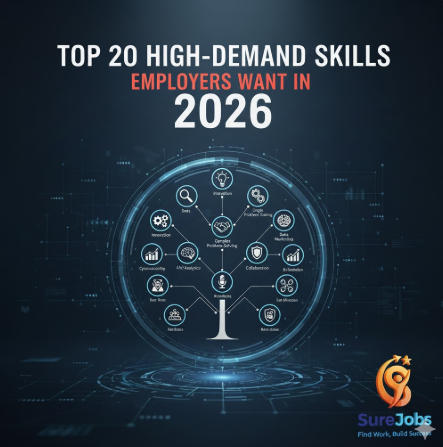
Feeling unsure about what it takes to land a great job in today’s world? You’re not alone. The job market is changing fast, but the good news is that the skills employers are desperately looking for are learnable. It’s no longer just about your degree or your technical know-how. Employers are now seeking a powerful mix of human-centric and digital skills. Here are Top 20 High-Demand Skills Employers Want in 2026
Think of it this way: companies can teach you how to use their specific software, but they can’t easily teach you to be a good person who communicates well, solves problems, and gets along with others.
This list breaks down the 20 most valuable skills into two simple categories: the “Human Skills” (the timeless qualities that make us effective) and the “Digital Skills” (the new tools you need to thrive). Master a few from each list, and you will become an incredibly strong candidate for almost any role.
Part 1: The Human Skills (You Can’t Be Replaced by a Robot)
These are the foundational skills that make you a great colleague, a reliable employee, and a future leader. They are the bedrock of a successful career in any field.
READ ALSO : 10 Common CV Mistakes That Are Costing You Interviews (And How to Fix Them!)
1. Clear Communication
This is the number one skill for a reason. It’s not just about talking; it’s about making yourself understood and understanding others. This means writing emails that are easy to read, speaking up in meetings with confidence, and, most importantly, listening carefully so you don’t miss important details. A team that communicates well is a team that wins.
2. The Art of Teamwork
Very few jobs are done in isolation. Can you work well with others, even people you might not naturally get along with? Teamwork is about sharing credit, supporting your colleagues when they struggle, and working towards a common goal instead of just your own success.
3. Solving Problems Creatively
Employers don’t want people who just bring them problems. They want people who bring them solutions. Problem-solving means seeing a challenge, thinking it through logically, and coming up with a smart way to fix it. It’s about being resourceful and not giving up when things get difficult.
Part 2: The Digital Skills (Your Toolkit for the Modern World)
These skills are about effectively using the technology that powers our world. You don’t need to be a computer genius, but you do need to be comfortable and capable.
11. Digital Literacy
This is the basic ability to use computers and software confidently. It means knowing how to use word processors and spreadsheets, navigate the internet safely, use email professionally, and learn new apps and programs without being terrified. It’s the absolute foundation for every modern job.
12. Data Analysis Basics
We are surrounded by data. Basic data skills mean you can look at numbers and information and understand what they are telling you. For example, can you look at a spreadsheet of sales figures and spot a trend? This skill helps you make smarter decisions instead of just guessing.
13. Protecting Yourself Online (Cybersecurity Awareness)
With so much work happening online, companies are terrified of hackers and data leaks. Having this skill means you understand the basics: creating strong passwords, spotting suspicious emails, and knowing how to handle company information safely. You become a first line of defense for your company.
14. Understanding AI and Automation
You don’t need to be an engineer, but you should understand what Artificial Intelligence can and cannot do. Knowing how to use AI tools to help with tasks like writing, research, or data organization can make you incredibly efficient. It’s about working with technology, not being afraid of it.
15. Managing Projects
This is the skill of getting things done from start to finish. It involves planning, organizing, and making sure a project stays on time and on budget. Even if you’re not a “Project Manager,” using these skills to manage your own workload or a small team task makes you incredibly valuable.
16. Skills for Serving Customers
This is a timeless skill with a modern twist. It’s about understanding a customer’s needs, whether in person, on the phone, or through a chat window, and helping them solve their problem. It requires patience, good communication, and a genuine desire to help.
17. Selling and Influencing
Again, this isn’t just for salespeople. Every time you pitch a new idea to your team or try to get your boss to approve a project, you are using persuasion. It’s about building a strong case for your ideas and communicating them in a way that gets others on board.
18. Managing Your Online Presence
Employers will look you up. Managing your online presence means being mindful of what you post on social media and understanding that your personal profiles can affect your professional life. It also means building a positive profile, for example, on LinkedIn, to connect with opportunities.
19. Thinking Creatively with Tech
This is where human and digital skills merge. It’s about using digital tools to create new things—whether it’s designing a simple graphic for a presentation, editing a short video for a training, or using a tool to build a basic website. It’s about being a maker, not just a user.
20. Always Learning New Things
This is the most important skill on the list. The willingness to learn is what will allow you to master all the other skills. It means having a curious mind, being open to new ideas, and actively looking for ways to improve yourself. In a changing world, the person who never stops learning will never be left behind.
4. Thinking Critically
This is your ability to think for yourself. It means not taking every piece of information at face value. Can you look at a report, a news article, or a new company policy and ask smart questions? “Is this true? Where is the evidence? What are the other sides to this story?” Critical thinkers help companies avoid costly mistakes.
5. A Positive Attitude
Your attitude is contagious. Employers will always choose someone who is positive, eager to learn, and resilient over someone with a negative outlook. It’s about showing up with energy, seeing setbacks as temporary, and being the kind of person others enjoy being around.
6. Managing Your Time Wisely
This is about being the master of your own day. Can you prioritize your tasks, avoid distractions, and get your most important work done on time? When you manage your time well, you are reliable, you produce quality work, and you don’t cause stress for the rest of your team.
7. Adapting to Change
The only constant in today’s world is change. Companies need people who can roll with the punches. If a project changes direction, a new boss comes in, or the company adopts a new tool, adaptable people don’t complain, they lean in and figure out how to make it work.
8. Understanding Others (Empathy)
This is the secret sauce of great workplaces. Empathy is the ability to understand and share the feelings of another person. It helps you connect with customers, resolve conflicts with colleagues, and create a work environment where people feel valued and respected.
9. Leading from Where You Are
Leadership isn’t just a title for managers. It’s about taking ownership. If you see something that needs to be done, you do it. If a new team member is lost, you help them. Leadership is about stepping up, making decisions, and inspiring others through your actions, no matter what your job title is.
10. Giving and Receiving Feedback
This is a two-way street. Can you calmly and constructively tell a colleague how they could improve? More importantly, when your boss gives you criticism, can you listen without getting defensive and use it to grow? People who handle feedback well are always learning and improving.
The Bottom Line
Your future employability doesn’t depend on one magical skill. It depends on building a unique combination of these human and digital abilities. Look through this list and pick two or three you’d like to get better at. You can find free courses online, practice in your current job, or simply read more about them. By investing in these skills, you are not just preparing for a job—you are future-proofing your entire career.
- Complete Guide To Giftbit Cards: How to Buy, Redeem, Send, Receive & Use in 2026
- The Complete Guide to Rybbon Card: How to Buy, Redeem & Use in 2026
- Rewardful Cards: How to Buy, Redeem & Use in 2026
- The Complete Guide to Tango Card: Your Ultimate Resource for Digital Gifting in 2026
- How to Earn on GoEcho Group AI: Full Beginner’s Guide