
How To Apply For PTDF Overseas Scholarship 2026: Fully Funded Postgraduate Studies Abroad
26 Feb 2026 • 19 min read • By Sure Jobs
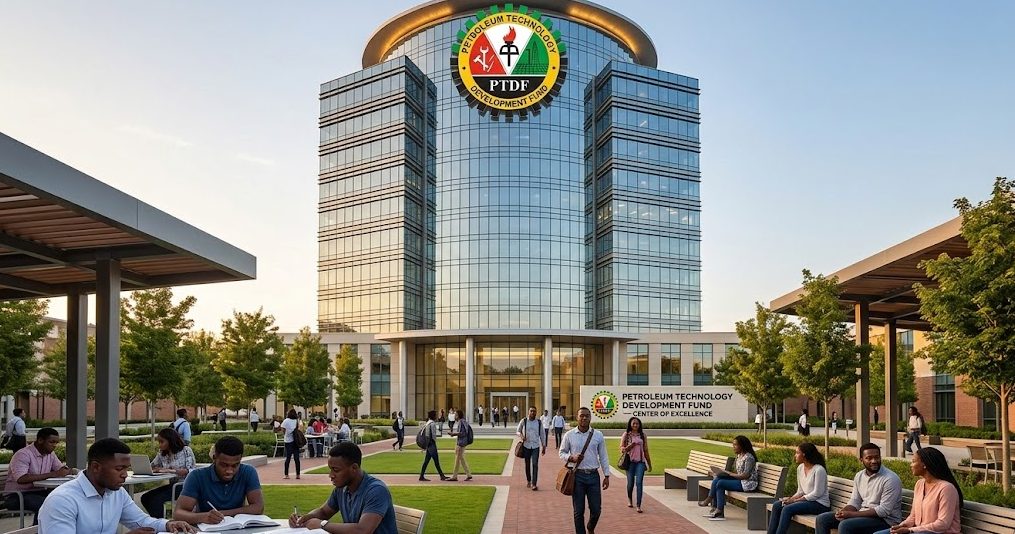
There is a moment in every ambitious person’s life when you realize that the opportunities you have access to locally are not enough. You need more. More knowledge, more exposure, more connections, more of the kind of education that only comes from stepping outside your comfort zone and into a world class institution far from home. For Nigerians, that moment often comes with a heavy weight, because studying abroad is expensive, and the cost can feel insurmountable.
But then there are scholarships. And among them, one stands out as perhaps the most prestigious and comprehensive funding opportunity available to Nigerian students: the Petroleum Technology Development Fund Overseas Scholarship.

Imagine receiving a letter that tells you all your expenses for studying abroad will be fully covered. Your tuition, paid. Your flight tickets, booked. Your accommodation, sorted. Your living expenses, provided. For thousands of Nigerians every year, this dream remains just out of reach, but for a select few who understand how to navigate the PTDF scholarship process, it becomes reality.
The PTDF Overseas Scholarship is not just financial aid. It is a strategic investment by the Federal Government in the people who will drive Nigeria’s most important industry forward. Established to build indigenous capacity in the oil and gas sector, this scholarship has sent hundreds of brilliant Nigerians to some of the world’s best universities. And for the 2026 academic session, the opportunity is open once again.
If you are reading this guide, you are likely considering applying for this life changing opportunity. Perhaps you have heard about it from friends who became scholars, read about it in the news, or have been waiting for this announcement for months. Whatever brought you here, this comprehensive guide will walk you through everything you need to know about the PTDF Overseas Scholarship 2026.
From understanding what the scholarship offers to meeting the requirements, from crafting a compelling statement of purpose to preparing for interviews, consider this your complete companion for the journey ahead. The deadline is approaching, and every day counts.
What is the PTDF Overseas Scholarship?
The Petroleum Technology Development Fund is a Federal Government agency established with a clear and focused mandate: to develop indigenous human capacity and petroleum technology for Nigeria’s oil and gas sector. Think of it as the government’s strategic investment in the people who will drive the nation’s most important industry forward.
The Overseas Scholarship Scheme represents one of PTDF’s flagship programmes. Each year, the Fund selects outstanding Nigerian graduates to pursue postgraduate studies at partner universities abroad. The goal is simple but ambitious: to create a pool of highly skilled professionals and researchers who can contribute to national development, energy security, and industrial growth.
For the 2026 academic session, PTDF is offering scholarships for both Master’s and Doctoral programmes in selected universities across four countries: the United Kingdom, Germany, France, and Malaysia. This is not just a scholarship; it is a strategic investment in Nigeria’s future workforce.
The scheme is designed to expose Nigerian scholars to world class universities, cutting edge research facilities, and global best practices. More importantly, it ensures that the knowledge gained is directly relevant to Nigeria’s energy and petroleum needs. When you return from your studies, you are expected to contribute your expertise to the development of the sector that powers the nation.
What Does the Scholarship Cover?
One of the most common questions applicants ask is about the value of the scholarship. The PTDF Overseas Scholarship is fully funded, meaning successful candidates do not need to worry about the financial burden of studying abroad.
The scholarship benefits include return flight tickets from Nigeria to your country of study and back upon completion, full tuition fees for the duration of your programme, bench fees where applicable particularly for science and engineering programmes that require laboratory access, health insurance coverage throughout your study period, and allowances for accommodation and living expenses to ensure you can focus on your studies without financial stress.
This comprehensive package removes virtually all financial barriers to studying abroad. When PTDF says fully funded, they mean it. Every legitimate expense associated with your education and stay overseas is covered.
Eligible Countries and Universities for 2026
For the 2026 award, PTDF has restricted applications to its partner universities in four countries: the United Kingdom, Germany, France, and Malaysia. This is not arbitrary. These are institutions where the Fund is satisfied that scholarship standards will be sustained and the Scheme’s objectives will be best achieved.
Several key partnerships have been announced. For PhD applicants in the United Kingdom, the scholarships will follow a split-site arrangement with three designated partner universities: Robert Gordon University, the University of Strathclyde, and the University of Portsmouth. These institutions have established relationships with PTDF and understand the Fund’s expectations for scholars.
For Germany, France, and Malaysia, applicants should consult the official PTDF portal for the complete list of partner universities and approved programmes. The Fund updates this information regularly, and applying for a course or institution not on the approved list will result in disqualification.
Understanding the Split-Site PhD Arrangement for the UK
If you are considering a PhD in the United Kingdom, you need to understand a unique feature of the 2026 scholarship cycle. PhD scholarships in the UK will be limited to split-site programmes only.
This is not a limitation but an innovation. The split-site arrangement allows successful candidates to undertake research by splitting residency between the College of Petroleum and Energy Studies, Kaduna, and designated UK partner universities.
Here is how it works. You will spend part of your research period at the College in Kaduna and part at your UK partner university. This structure advances PTDF’s strategic objective of strengthening local capacity and domesticating key aspects of its human capital development programmes.
The College in Kaduna is being positioned as a centre for world class postgraduate education, high impact research, and strong industry–academia partnerships. By requiring split-site PhDs, PTDF ensures that scholars contribute to building local institutions while benefiting from international exposure.
For MSc applicants, this arrangement does not apply. Master’s degrees will be completed entirely at the partner institutions abroad.
Selection Process: How PTDF Chooses Scholars
The PTDF scholarship is highly competitive. Thousands of qualified Nigerians apply each year, but only the most outstanding candidates are selected. Understanding how the selection process works can help you prepare better.
The process begins with an initial screening based on submitted qualifications. All applications are reviewed to ensure they meet the basic requirements and include all mandatory documents. Applications with missing or illegible documents are disqualified at this stage.
Following the initial screening, the top applicants in each category from each state are identified. PTDF aims for geographical balance while maintaining merit based standards. This means that outstanding candidates from every state have a chance.
Shortlisted candidates are then invited for an interview. These interviews are conducted across the six geopolitical zones at designated centres. Previous screenings have been held at locations including Abubakar Tafawa Balewa University in Bauchi for the North East, with similar centres in Ibadan, Enugu, Kaduna, Port-Harcourt, and Abuja.
A selection committee evaluates candidates using multiple criteria. Academic merit is fundamental, including the quality of degrees, complete academic transcripts, and relevant professional qualifications. For PhD applicants only, any published research is considered. Membership of professional bodies strengthens applications. The viability and relevance of the study plan or research proposal is critically important. And the relevance of prior studies to the oil and gas industry and the proposed programme is carefully assessed.
The process is designed to be transparent and fair. As one PTDF official explained, applicants apply strictly online and do not need to know anyone. The process is transparent, with a team of Federal Characters ensuring compliance with procedures.
Detailed Requirements for MSc Applicants
If you are applying for a Master’s degree scholarship, here are the specific requirements you must meet.
You must possess a minimum of Second Class Upper in your first degree. However, candidates with Second Class Lower may be considered if they have relevant industry experience. This provides a pathway for experienced professionals who may not have achieved the highest grades but have demonstrated capability in the workplace.
You must have completed the mandatory National Youth Service Corps programme. Your NYSC discharge certificate will be required during application.
You must be computer literate. This is essential for success in modern postgraduate programmes, and PTDF expects scholars to possess basic digital skills.
You must possess five O’Level credits, including English Language and Mathematics. These credits must be obtained in not more than two sittings from WAEC, GCE, SSCE, or NECO.
You must submit a Statement of Purpose of maximum five hundred words that clearly states the rationale for your proposed study, the relevance of your proposed study to the oil and gas industry, and the expected contribution of your studies to national development. This statement is your opportunity to convince the selection committee that your application deserves serious consideration.
You must have a National Identity Number and ensure it is fully verified prior to application. Note that verification charges apply, so complete this process early.
Detailed Requirements for PhD Applicants
Doctoral applicants face additional requirements given the research intensive nature of PhD programmes.
You must possess at least Second Class Lower in your first degree and a good postgraduate degree. Your Master’s degree certificate will be required during application.
Like MSc applicants, you must have completed the NYSC programme and be computer literate. You must possess five O’Level credits, including English Language and Mathematics.
The research proposal is perhaps the most critical part of your PhD application. You must submit a research proposal relevant to the oil and gas industry of maximum five pages covering your topic, introduction and background, objectives, methodology, and data collection approach. Your proposal must demonstrate clear thinking, feasibility, and relevance to Nigeria’s oil and gas sector.
If you are applying for a PhD scholarship under the PTDF/DAAD partnership in Germany, you are required to secure a research supervisor prior to the final selection interviews. This is a significant additional requirement that requires proactive outreach to potential supervisors at German institutions.
While not mandatory, relevant publications strengthen your application significantly. You must also include your master’s degree project as part of your application materials.
Required Documents for All Applicants
When applying online, you must scan and upload clear copies of several documents. These include your first degree certificate or statement of result, your NYSC discharge certificate, your WAEC, GCE, SSCE, or NECO results and the relevant verification details to enable online verification, a recent passport photograph, your Local Government Identification Letter, and for PhD applicants, your master’s degree certificate and evidence of membership of relevant professional associations.
If you are a lecturer, you must also submit a letter from your Vice Chancellor confirming that you are not currently benefiting from any other scholarship.
How to Apply Step by Step
Follow these steps carefully to ensure your application is submitted correctly.
First, visit the official PTDF scholarship portal. Do not use any other website. PTDF has warned applicants to beware of fraudsters posing as agents of the Fund. The application process is free of charge.
Before starting your application, review the full list of sponsored courses available on the portal. Ensure that your proposed programme is on the approved list and offered at a PTDF partner institution.
Register on the portal with a valid email address and create a secure password. Then complete all sections of the online application form accurately. Double check every entry for errors.
Upload clear, legible scans of all required documents. Documents that are blurry or difficult to read may lead to disqualification.
For MSc applicants, upload your five hundred word Statement of Purpose. For PhD applicants, upload your five page research proposal.
Review your entire application before final submission. Once submitted, you may not be able to make changes. Print or save your application confirmation for your records.
Multiple applications will result in automatic disqualification. Submit only once.
Years of Study: Programme Duration
Understanding how long you will be studying helps with planning.
Master’s degrees typically last between twelve and twenty four months depending on the country, university, and specific programme. Most UK taught master’s programmes are twelve months, while programmes in other countries may extend to eighteen or twenty four months.
Doctoral programmes generally last thirty six months for full time study. However, the split site arrangement for UK PhDs means you will spend time at both the College in Kaduna and your UK partner university. The total duration remains approximately three years, but the distribution of time between Nigeria and the UK varies by programme and research requirements.
Both MSc and PhD programmes are full time, on campus degrees. Distance learning or part time options are not covered by the scholarship.
Tuition and Fees: What PTDF Covers
Since PTDF scholarships are fully funded, successful candidates do not pay tuition or related fees out of pocket. However, understanding what is covered helps you appreciate the value of the award.
PTDF pays full tuition fees directly to the partner institution. The amount varies by university and programme, but the Fund covers the complete cost. For programmes that require laboratory access, equipment use, or other research facilities, bench fees are covered where applicable.
The combination of tuition payment, living allowances, health insurance, and flight tickets means scholars can focus entirely on their studies without worrying about finances. There are no hidden costs or unexpected expenses that scholars must bear personally.
Tips for Getting Your Application Approved
Having covered the requirements and process, here are practical tips to strengthen your application.
Start early and verify your NIN. Verification takes time and incurs charges. Do not wait until the last week to begin this process. Start early, complete your verification, and ensure your NIN is properly linked before submitting your application.
Choose the right programme. Your proposed course of study must be consistent with your prior academic background and relevant to the oil and gas industry. An engineering graduate applying for a finance programme may be disqualified for lack of relevance. Carefully review the approved courses list and select programmes that align with your qualifications and experience.
Craft a compelling Statement of Purpose. For MSc applicants, your five hundred word Statement of Purpose is your chance to stand out. Do not write generic statements. Be specific about why you want to study your chosen programme, how it relates to the oil and gas industry, and what you hope to contribute to Nigeria upon your return. A strong statement demonstrates clear understanding of the programme and its relevance, connection between your past experiences and future goals, and genuine commitment to contributing to national development.
Develop a strong research proposal. For PhD applicants, your research proposal is the most important part of your application. Take time to develop a proposal that is relevant to the oil and gas industry, feasible within the time and resources available, well structured with clear objectives and methodology, and original enough to contribute new knowledge. Have your proposal reviewed by mentors or colleagues before submission.
READ ALSO: Rowan University Scholarship 2026 and How To Apply
Secure professional memberships. Membership in relevant professional bodies strengthens your application. If you are eligible for membership in organizations like the Nigerian Society of Engineers, the Nigerian Institute of Management, or other professional associations, obtain your membership and include evidence in your application.
Gather transcripts in advance. Shortlisted candidates invited for interview will be required to present their transcripts. Do not wait until after shortlisting to request your transcripts from your university. Request them now so they are ready when needed.
For PhD Germany applicants, secure a supervisor early. If you are applying for the PTDF/DAAD partnership in Germany, you must secure a research supervisor prior to final selection interviews. This requires proactive outreach to potential supervisors at German institutions. Start this process early, as academics receive many requests and may take time to respond.
Ensure document clarity. All uploaded documents must be clear and legible. Blurry scans, faded text, or incomplete pages can lead to disqualification. Use a good scanner or scanning app, and verify that every page is readable before uploading.
Be honest and accurate. Submission of falsified documents will result in automatic disqualification. Do not be tempted to submit fake certificates or alter your results. PTDF verifies documents, and dishonesty can have serious consequences beyond just scholarship disqualification.
Apply only once. Multiple applications will result in automatic disqualification. Submit one complete application rather than trying multiple times.
Check your eligibility first. Candidates previously sponsored by PTDF for a scholarship category are ineligible to apply again for the same or lower category. If you have received PTDF funding before, confirm your eligibility before investing time in the application.
Prepare for interview. If shortlisted, prepare thoroughly for your interview. Review your application, research current issues in the oil and gas industry, and be ready to discuss your study plans in detail. The interview panel assesses not just your qualifications but your communication skills, passion, and readiness for overseas study.
Important Deadlines and Dates
The application deadline for the 2026 PTDF Overseas Scholarship is the 27th of February 2026.
This deadline was set approximately six weeks from the announcement date in mid January 2026. Do not wait until the final day to submit your application. Technical issues, internet problems, or last minute document issues can derail even the most qualified candidate.
After the deadline, the selection process begins with initial screening, followed by shortlisting and interviews. Shortlisted candidates should have their transcripts readily available.
Common Mistakes to Avoid
Learn from others’ mistakes rather than making them yourself.
Applications for programmes not on the PTDF approved list or at non partner institutions will be disqualified. Always verify that your chosen course and university are approved.
Uploaded documents must be clear and readable. If the selection committee cannot read your certificates, they cannot assess your qualifications.
Follow the document checklist carefully. Missing a required document, such as your NYSC certificate or O’Level results, can result in disqualification.
Your NIN must be fully verified before application. Starting the verification process too late may mean your NIN is not ready when you need to apply.
Last minute applications are risky. Technical problems, slow internet, or document upload issues can prevent you from submitting successfully. Apply early.
Why This Scholarship Matters
Beyond the personal benefits of studying abroad, the PTDF Overseas Scholarship represents a strategic investment in Nigeria’s future. The oil and gas sector remains critical to the nation’s economy, and developing indigenous capacity reduces dependence on foreign expertise.
Scholars return home with world class training, exposure to global best practices, and research experience that can be applied to local challenges. They become the engineers, geoscientists, researchers, and industry leaders who will drive the sector forward.
For successful candidates, the scholarship opens doors that might otherwise remain closed. The network of PTDF scholars and alumni spans the globe, creating connections that last throughout careers. And the experience of living and studying abroad shapes perspectives in ways that classroom learning alone cannot match.
Frequently Asked Questions
Can I apply if I am still awaiting my NYSC discharge certificate?
You must have completed NYSC to apply. Your discharge certificate is a required document.
I have a Second Class Lower. Can I still apply?
For MSc, Second Class Lower candidates may be considered with relevant industry experience. For PhD, Second Class Lower in first degree is acceptable with a good postgraduate degree.
Is there an age limit?
The official requirements do not specify an age limit, but academic merit and relevance are the primary criteria.
Can I apply for a programme outside engineering and geosciences?
Yes, if the programme is on the approved list and relevant to the oil and gas industry. This includes fields like environmental studies, renewable energy, and management related disciplines.
Do I need to secure admission before applying?
No. PTDF manages the admission process for successful candidates through their partner institutions. You apply to PTDF first, and if selected, they facilitate your admission.
Can I apply if I am already studying abroad?
The scholarship is for new students, not those already enrolled in overseas programmes. Check the eligibility guidelines carefully.
What happens after I am selected?
Selected candidates will receive further instructions on admission processing, visa applications, and pre departure preparations. PTDF provides support throughout the process.
Is the application really free?
Yes. PTDF has warned applicants to beware of fraudsters. The application process is completely free.
Conclusion
The PTDF Overseas Scholarship 2026 represents one of the most valuable opportunities available to Nigerian students seeking postgraduate education abroad. With comprehensive funding covering everything from tuition to living expenses, successful candidates can focus entirely on their studies without financial worry.
But this opportunity is not handed out freely. It requires preparation, attention to detail, and genuine merit. The selection process is rigorous and competitive, designed to identify the candidates most likely to succeed academically and contribute meaningfully to Nigeria’s oil and gas sector upon their return.
If you meet the requirements, if your proposed studies align with PTDF’s mandate, and if you are willing to put in the work to craft a strong application, this scholarship could be your pathway to a transformative educational experience. The universities, the research facilities, the global exposure, and the professional network are all waiting for the right candidates.
The deadline of the twenty seventh of February 2026 is approaching. Do not let this opportunity pass you by. Visit the official PTDF portal, review the approved courses, gather your documents, and submit your application before it is too late.
Your journey to becoming a PTDF scholar could begin today. Take that first step.
Leave a Reply